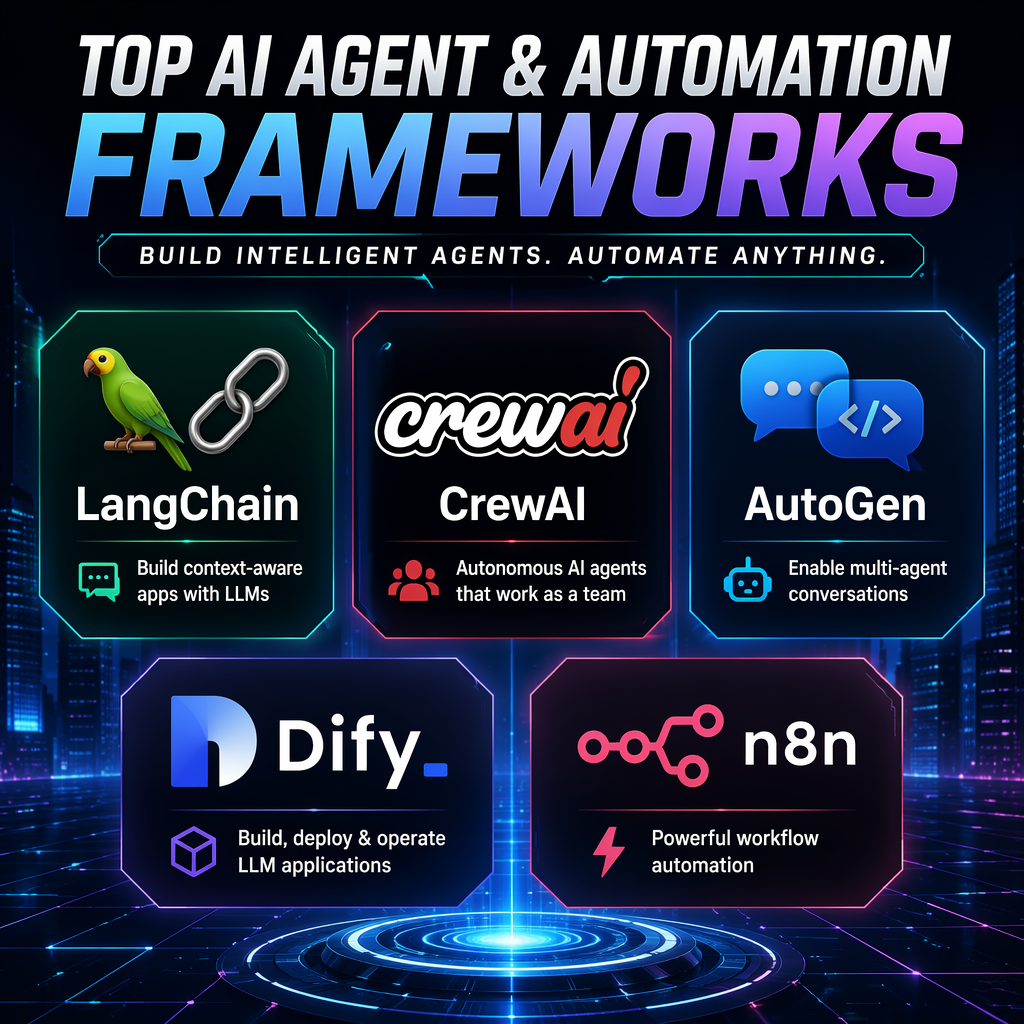
The AI agent ecosystem has grown exponentially, with over 177 frameworks competing for attention in 2026. Engineers, founders, and operators face a critical decision: selecting a framework that aligns with their use case, team expertise, and scalability needs. This article compares five leading frameworks-LangChain, CrewAI, AutoGen, Dify, and n8n-based on architecture, strengths, weaknesses, and real-world trade-offs.
LangChain: The Ecosystem King
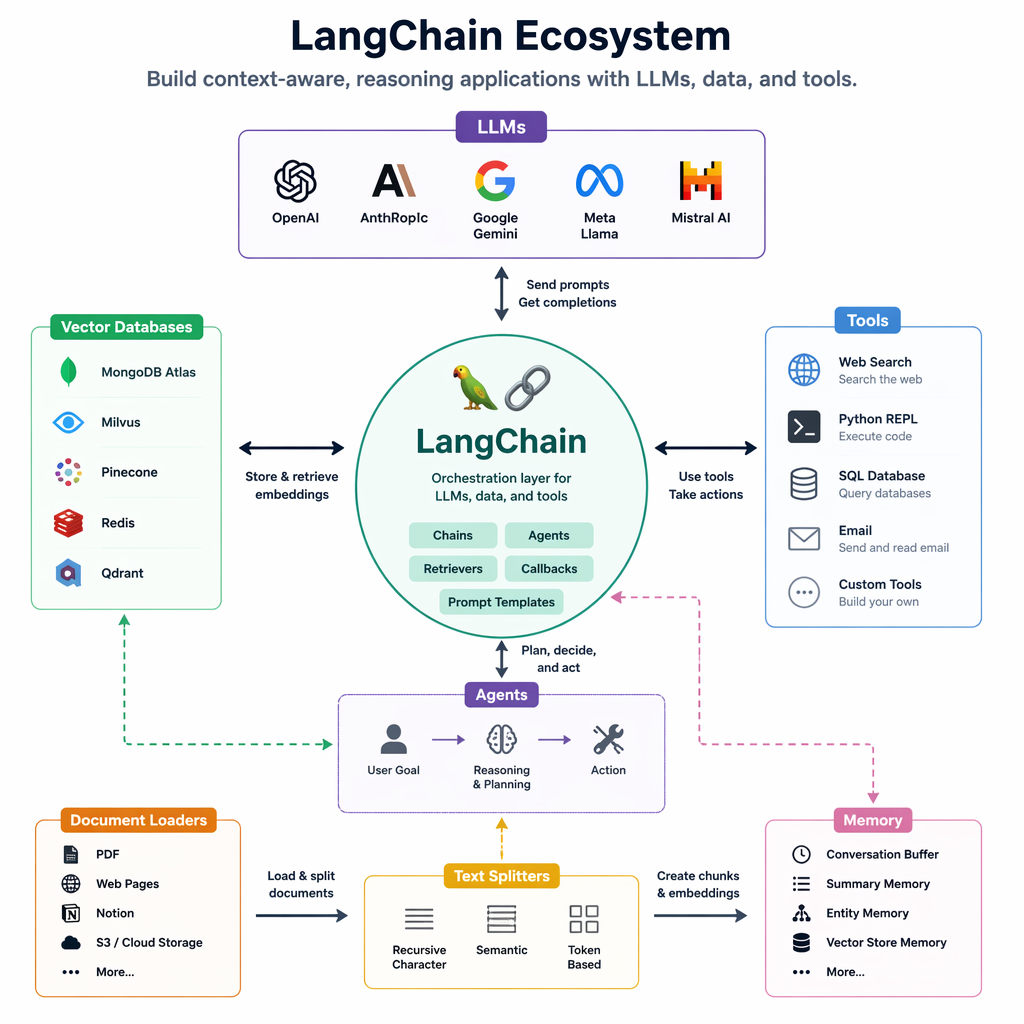
LangChain is the most widely adopted framework for building LLM-powered applications. It excels at Retrieval-Augmented Generation (RAG) pipelines and offers integrations with over 100 tools, vector databases, and LLMs. Its LangGraph extension supports stateful, cyclical workflows, while LangSmith provides observability and tracing. However, LangChain's abstraction layers can be verbose and challenging for simple tasks, and its documentation is fragmented due to v1/v2 migrations.
Key Takeaways
- Best for complex RAG systems and flexible pipelines.
- Requires Python expertise and familiarity with its ecosystem.
- Ideal for teams needing wide tool integrations.
LangChain's massive ecosystem makes it the go-to choice for complex AI workflows, but its steep learning curve demands experienced developers.
CrewAI: Multi-Agent Done Right
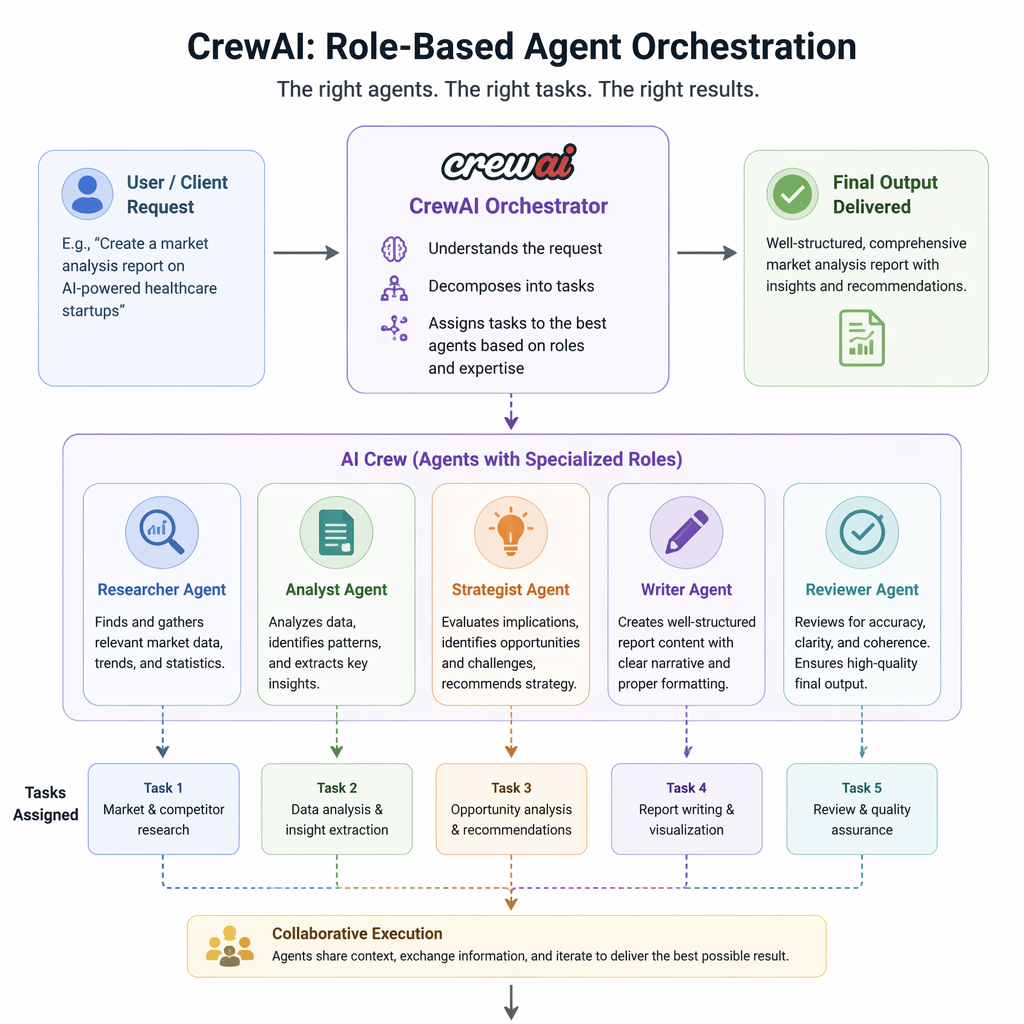
CrewAI simplifies multi-agent orchestration by allowing developers to define agents with specific roles, goals, and tasks. Built on LangChain, it is particularly effective for parallel task decomposition, such as assigning researcher, writer, and reviewer roles in a collaborative pipeline. While it offers cleaner code for multi-agent scenarios, it is less flexible for single-agent use cases and has a smaller community compared to LangChain.
Builder note
Consider CrewAI if your project involves multiple agents with specialized roles. Its intuitive design reduces boilerplate code, but state management between agents can become complex.
AutoGen: Microsoft's Conversational Agents
AutoGen, developed by Microsoft Research, focuses on conversational multi-agent systems. It shines in iterative workflows like code generation and debugging, where agents interact to refine solutions. AutoGen Studio offers a user-friendly interface for building workflows. However, its verbose agent conversations can slow down processes, and debugging conversation loops can be challenging.
Key Takeaways
- Best for iterative refinement tasks like code generation.
- Strong enterprise backing and integration with Microsoft's stack.
- Less suitable for linear pipelines or simple tasks.
Dify: No-Code Power
Dify is an open-source LLMOps platform designed for non-developers. Its drag-and-drop workflow builder enables rapid prototyping without code. Features include built-in RAG pipelines, prompt management, and model switching. While Dify is excellent for visual workflows, complex custom logic may require Python nodes, and its cloud version poses a vendor lock-in risk.
- Ideal for non-developers and rapid prototyping.
- Supports self-hosting via Docker.
- Active community with strong Japanese language support.
n8n: Workflow Automation for AI
n8n is a German-built workflow automation tool that has added AI/LLM nodes to its repertoire. With over 400 integrations, it is best suited for connecting AI to existing business tools. Its visual workflow editor is intuitive, but it is not purpose-built for AI agents, and complex logic often requires code nodes.
| Signal | Why it matters |
|---|---|
| LangChain excels at RAG pipelines. | Ideal for complex AI workflows requiring flexibility. |
| CrewAI simplifies multi-agent orchestration. | Best for role-specialized pipelines. |
| AutoGen focuses on conversational agents. | Great for iterative refinement tasks. |
| Dify offers no-code solutions. | Empowers non-developers to prototype AI apps. |
| n8n integrates AI with business tools. | Streamlines automation across SaaS platforms. |
Source Card
LangChain vs CrewAI vs AutoGen vs Dify: The Complete AI Agent Framework ...This comparison highlights the strengths and weaknesses of leading AI agent frameworks, helping builders make informed decisions.
dev.to
- LangChain vs CrewAI vs AutoGen vs Dify: The Complete AI Agent Framework Comparison [2026], dev.to
Builder implications
For teams evaluating Navigating AI Agent Frameworks: LangChain, CrewAI, AutoGen, Dify, and n8n, the useful question is not whether the announcement sounds important. The useful question is whether it changes how an agent system is built, tested, operated, or bought. The source from dev.to gives builders a concrete signal to inspect: LangChain vs CrewAI vs AutoGen vs Dify: The Complete AI Agent Framework .... That signal should be mapped against the parts of an agent stack that usually become fragile first, including tool contracts, long-running state, evaluation coverage, cost visibility, failure recovery, and the handoff between prototype code and production operations.
Production lens
Treat this as a systems decision, not a headline decision. A builder should ask how the change affects the agent loop, what needs to be measured, which failure modes become easier to catch, and whether the team can explain the behavior to a customer or operator when something goes wrong. If the answer is vague, the technology may still be useful, but it is not yet a production advantage.
Adoption checklist
- Identify the workflow where AI agents, LangChain, CrewAI, AutoGen already creates measurable pain, such as slow triage, brittle handoffs, unclear ownership, or poor observability.
- Write down the current baseline before changing the stack: latency, cost per run, recovery rate, review time, and the percentage of tasks that need human correction.
- Prototype against a real internal workflow instead of a demo task. The workflow should include imperfect inputs, missing context, tool failures, and at least one approval step.
- Add traces, event logs, and evaluation checkpoints before expanding usage. A new framework or model is hard to judge when the team cannot see where the agent made its decision.
- Keep rollback boring. The first version should let an operator pause automation, inspect the last decision, and return control to a human without losing state.
- Review the source again after testing. The source-backed claim should line up with observed behavior in your own environment, not just with launch copy or release notes.
| Area | Question | Practical test |
|---|---|---|
| Reliability | Does the agent fail in a way operators can understand? | Run the same task with missing data, stale data, and a tool timeout. |
| Observability | Can the team reconstruct why a decision happened? | Inspect traces for inputs, tool calls, model outputs, approvals, and final state. |
| Cost | Does value scale faster than usage cost? | Compare cost per successful task against the old human or scripted workflow. |
| Governance | Can sensitive actions be reviewed or blocked? | Require approval on high-impact actions and log who approved the step. |
What to watch next
The next signal to watch is whether builders start publishing implementation notes, migration stories, benchmarks, or reliability reports around this source. That secondary evidence matters because agent infrastructure often looks clean at release time and only shows its real shape once teams connect it to messy business workflows. Strong follow-on evidence would include reproducible examples, clear limits, documented failure recovery, and customer stories that describe what changed in the operating model.
Key Takeaways
- Do not treat a release as automatically production-ready because it comes from a strong source.
- Use the source as a reason to test a specific workflow, not as a reason to rewrite the entire stack.
- The best early signal is not novelty. It is whether the system becomes easier to observe, recover, and improve.