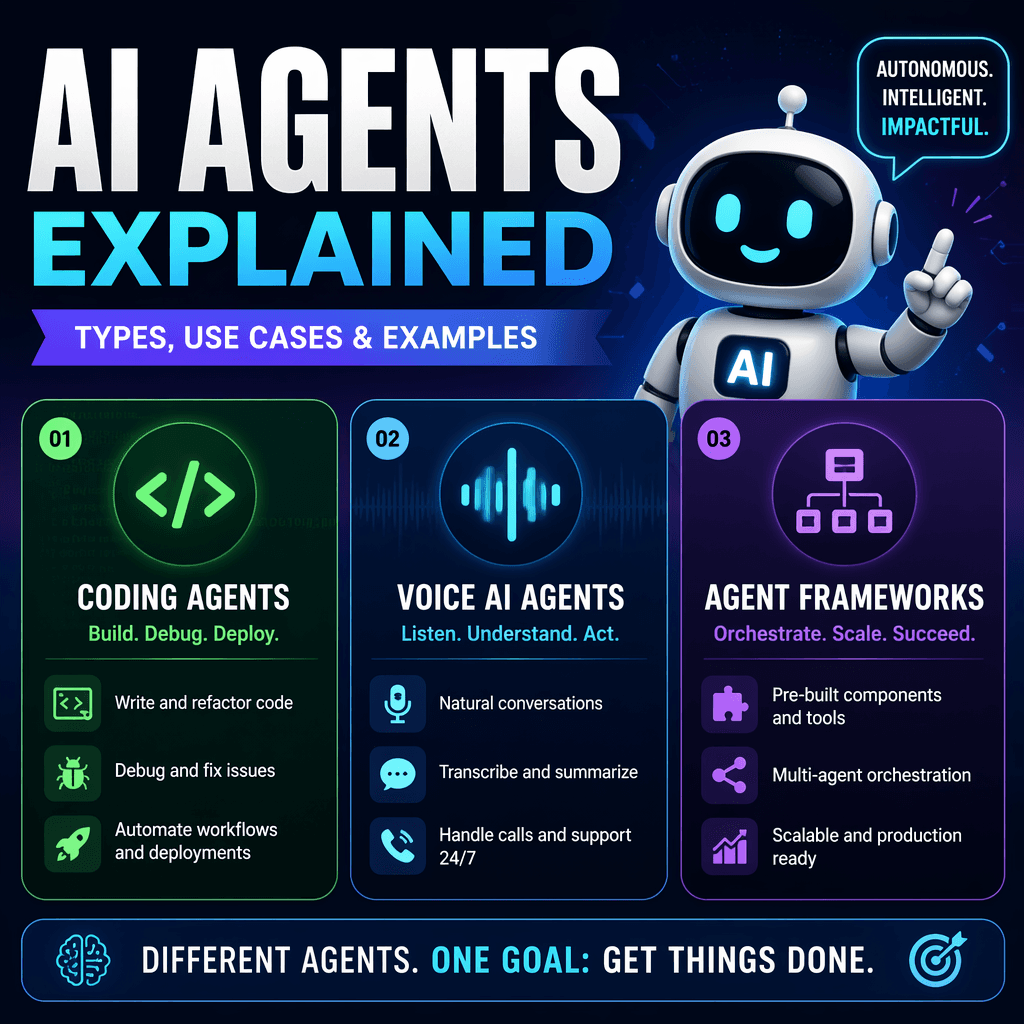
The landscape of AI agent frameworks has evolved dramatically in 2026, with a surge in tools designed to empower engineers, founders, and operators. The GitHub repository 'awesome-ai-agents-2026' by caramaschiHG stands out as a definitive resource, offering over 340 curated tools across 20 categories. This article explores the repository's highlights, engineering implications, and practical adoption strategies.
Key Features of 'awesome-ai-agents-2026'
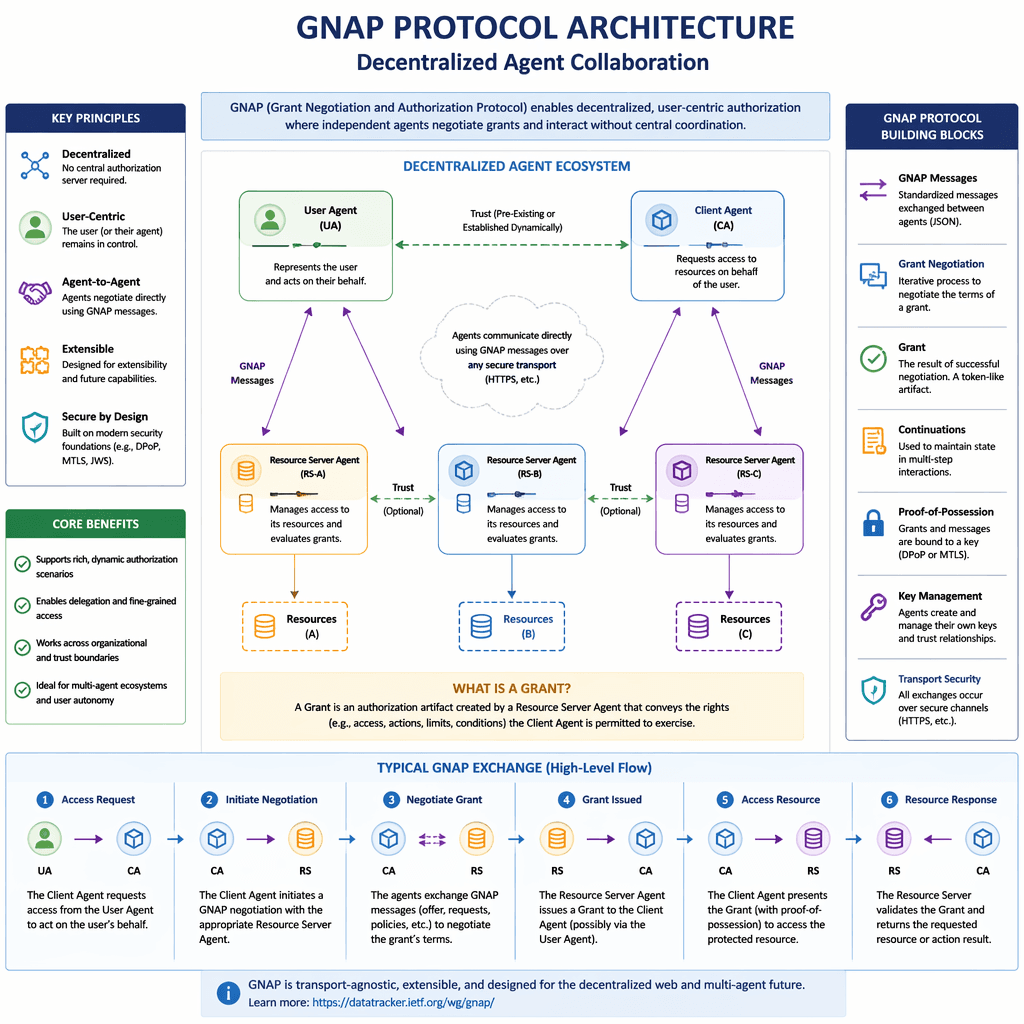
The repository categorizes tools into areas such as coding agents, frameworks, voice AI, creative tools, self-hosted solutions, and emerging protocols. Notably, the inclusion of GNAP (Git-Native Agent Protocol) in the latest update reflects a growing trend toward decentralized agent collaboration. Updated monthly, the repository ensures relevance and encourages contributions from the community.
Key Takeaways
- 340+ resources across 20+ categories, updated monthly.
- Focus on coding agents, frameworks, voice AI, and creative tools.
- Introduction of GNAP for decentralized agent collaboration.
- Community-driven contributions ensure continuous improvement.
“The most comprehensive curated list of AI agents, frameworks, and tools for 2026.”
Builder note
When exploring 'awesome-ai-agents-2026,' prioritize tools aligned with your operational goals. For example, coding agents are ideal for automating repetitive development tasks, while voice AI tools can enhance customer interaction workflows.
Source Card
caramaschiHG/awesome-ai-agents-2026This repository matters because it consolidates cutting-edge AI agent tools and frameworks, offering engineers and founders a centralized resource for innovation.
GitHub
| Signal | Why it matters |
|---|---|
| GNAP (Git-Native Agent Protocol) | Enables decentralized collaboration between agents. |
| Monthly updates | Ensures tools remain relevant and up-to-date. |
| Community contributions | Fosters innovation and diversity in tool development. |
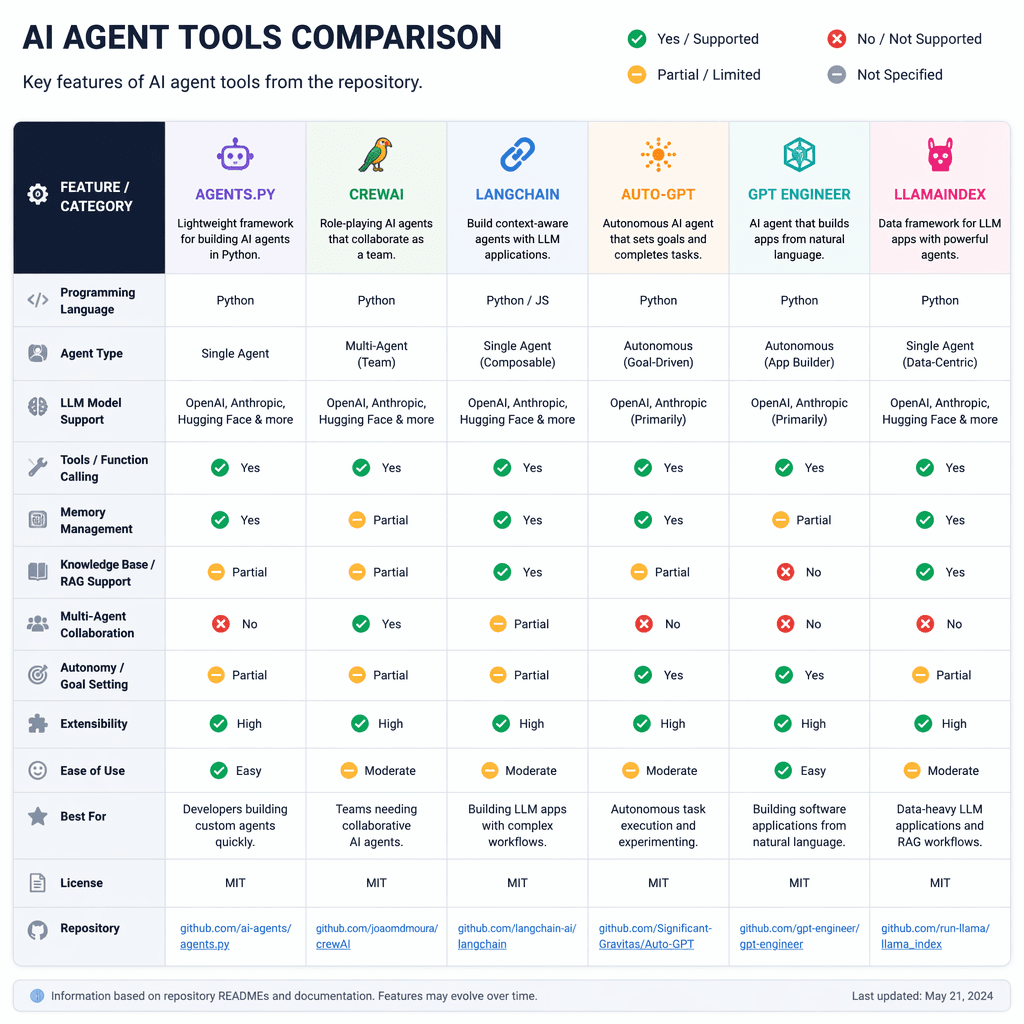
- Review the repository's categories to identify tools relevant to your needs.
- Test GNAP for decentralized agent collaboration in distributed environments.
- Contribute to the repository to shape future updates and tools.
- Coding agents for automating development tasks.
- Frameworks for building scalable AI systems.
- Voice AI tools for enhancing customer interactions.
- Creative AI tools for generating content and designs.
Adoption Strategies for Engineers and Founders
Adopting tools from 'awesome-ai-agents-2026' requires a strategic approach. Engineers should evaluate tools based on compatibility with existing infrastructure, scalability, and ease of integration. Founders can leverage these tools to accelerate product development and enhance operational efficiency. For example, coding agents can automate repetitive tasks, freeing up developers for higher-value work.
Risks and Tradeoffs
While the repository offers a wealth of resources, adopting new tools comes with risks. Compatibility issues, learning curves, and potential over-reliance on specific frameworks can hinder progress. Engineers should conduct thorough testing and maintain fallback systems to mitigate these risks.
- caramaschiHG/awesome-ai-agents-2026 - GitHub: https://github.com/caramaschiHG/awesome-ai-agents-2026
Builder implications
For teams evaluating Engineering Insights from the Latest AI Agent Frameworks in 2026, the useful question is not whether the announcement sounds important. The useful question is whether it changes how an agent system is built, tested, operated, or bought. The source from github.com gives builders a concrete signal to inspect: caramaschiHG/awesome-ai-agents-2026 - GitHub. That signal should be mapped against the parts of an agent stack that usually become fragile first, including tool contracts, long-running state, evaluation coverage, cost visibility, failure recovery, and the handoff between prototype code and production operations.
Production lens
Treat this as a systems decision, not a headline decision. A builder should ask how the change affects the agent loop, what needs to be measured, which failure modes become easier to catch, and whether the team can explain the behavior to a customer or operator when something goes wrong. If the answer is vague, the technology may still be useful, but it is not yet a production advantage.
Adoption checklist
- Identify the workflow where AI agents, frameworks, GNAP, engineering tools already creates measurable pain, such as slow triage, brittle handoffs, unclear ownership, or poor observability.
- Write down the current baseline before changing the stack: latency, cost per run, recovery rate, review time, and the percentage of tasks that need human correction.
- Prototype against a real internal workflow instead of a demo task. The workflow should include imperfect inputs, missing context, tool failures, and at least one approval step.
- Add traces, event logs, and evaluation checkpoints before expanding usage. A new framework or model is hard to judge when the team cannot see where the agent made its decision.
- Keep rollback boring. The first version should let an operator pause automation, inspect the last decision, and return control to a human without losing state.
- Review the source again after testing. The source-backed claim should line up with observed behavior in your own environment, not just with launch copy or release notes.
| Area | Question | Practical test |
|---|---|---|
| Reliability | Does the agent fail in a way operators can understand? | Run the same task with missing data, stale data, and a tool timeout. |
| Observability | Can the team reconstruct why a decision happened? | Inspect traces for inputs, tool calls, model outputs, approvals, and final state. |
| Cost | Does value scale faster than usage cost? | Compare cost per successful task against the old human or scripted workflow. |
| Governance | Can sensitive actions be reviewed or blocked? | Require approval on high-impact actions and log who approved the step. |
What to watch next
The next signal to watch is whether builders start publishing implementation notes, migration stories, benchmarks, or reliability reports around this source. That secondary evidence matters because agent infrastructure often looks clean at release time and only shows its real shape once teams connect it to messy business workflows. Strong follow-on evidence would include reproducible examples, clear limits, documented failure recovery, and customer stories that describe what changed in the operating model.
Key Takeaways
- Do not treat a release as automatically production-ready because it comes from a strong source.
- Use the source as a reason to test a specific workflow, not as a reason to rewrite the entire stack.
- The best early signal is not novelty. It is whether the system becomes easier to observe, recover, and improve.